

How much weight can a mountain bike hold? While average-sized cyclists never consider this question, heavier ones may wonder if bikes have weight limits.
Manufacturers typically design and test their bikes within a specific weight range, but how high is that range?
Today, we will discuss this topic. Keep reading to catch valuable information!
Table of Contents
How Much Weight Can a Mountain Bike Hold?

Mountain bikes have a weight limit. An average mountain bike can hold 300 pounds. This limit will depend on the type of bike and the intended use.
All bikes have a weight limit. So if you exceed the limit, there is a high chance that your bike will break.
Generally, road bikes typically have a higher weight limit than mountain bikes.
A mountain bike can carry a person weighing about 300 pounds when riding at 10 mph on flat terrain.
Hence, if you weigh more than 300 pounds and want to go at a faster speed, it is necessary to pick a bike with a higher weight limit.
The mountain bike is a tough bike built to be reliable on any mountain trail.
Respecting its weight limits will reduce the risk of the mountain bike breaking down while you are on the road.
Most manufacturers show their bike weight limits in the “Intended Use” section, which you can find in the owner’s manual.
Additionally, you can find this information in the support FAQ section of the manufacturer’s website.
Is There Weight Limit for A Mountain Bike?

While mountain bikes look sturdy and can work well on rough terrain, they still have a weight limit.
The best way to determine your mountain bike’s weight limit is to check out the owner’s manual.
In most cases, the tire size, wheel, and frame material will affect the bike’s weight limit. A bike with thicker tires and larger wheels can carry a heavier rider.
Bicycles with wheels smaller than 26 inches will fit children or adults of the same weight as children.
Models with larger wheels (about 29 inches) will work well with one adult.
Yet, if they had flimsy carbon fiber frames and thinner wheels, they would have supported only about 220 pounds.
What Happens if You Exceed the Bike’s Weight Limit?
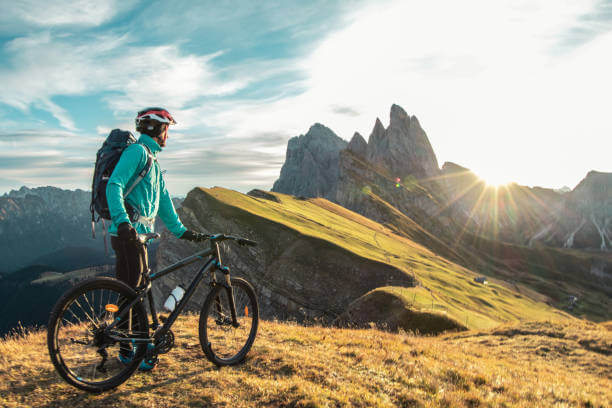
If your weight is over the weight limit of the bike you’re riding, you may face some potential hazards.
Your Wheels Get Damaged
Mountain bike wheels are built to withstand a lot of wear and tear on rough terrain. They are durable but not indestructible.
If your weight is more than the wheels can handle, there’s a good chance you’ll damage the rims or warp them.
Once your rims have been broken, it is impossible to continue using your bike.
In this case, you will have to replace the entire wheel. The larger your wheel is, the more severely it can deform under too much weight.
So you need to ensure your bike can handle your weight without problems.
In addition, we recommend regularly checking out your wheels to ensure they have enough spokes and are all in good condition.
Weight Distribution
The saddle and handlebars are the parts that help manage weight distribution on your mountain bike. The wider these parts, the more pounds the mountain bike can hold.
Slender bike seats and handlebars are made to produce a super lightweight riding experience that is awesome.
However, they won’t benefit heavier riders who value support rather than speed.
Put Too Much Stress on Your Bike Frame
Not all bicycle frames can withstand weight equally.
For example, carbon fiber and steel frames are not the same, although both are solid and robust materials.
The steel alloy steel frame is your best bet if you care about frame strength.
Although carbon fiber frames are durable, they are usually thinner, which does not allow them to withstand heavier weight.
If you choose a bike with a weak frame that can’t handle your weight, both you and your bike will get hurt and damaged.
What Factors Affect Bike’s Weight Limit?
Frame
Mountain bikes with carbon fiber and titanium frames are usually light but brittle, making them less than ideal for heavy loads.
Meanwhile, models with aluminum frames can withstand quite a bit of weight.
The perfect choice for larger riders or those who often use their bicycles to carry goods are models with frames made of steel or steel alloys.
Wheels

Wheels are the part most affected by the bike’s overall weight.
Large diameter wheels tend to be more brittle, not allowing them to carry load.
On the flip side, smaller, solid wheels often come with aluminum and steel alloy rims that can hold a sustained weight.
Tires
Bikes with thin tires are not suitable for heavy loads. On the flip side, fat tires can bear much more weight as they do well at distributing the pressure.
Seat and Handlebar
These parts are responsible for distributing your weight more evenly.
The narrow seat is not excellent for heavy riders as it will place their weight on the mountain bike’s center of gravity, putting pressure on all other parts.
Suspension
If you are heavy or tend to handle heavy goods, you should consider a rigid suspension.
The usual one is usually not stiff enough to absorb impact, making them lower weight capacity.
FAQs
Do Other Bikes Have Weight Limits?
All bikes have weight limits. But with various types, materials, parts, and geometry used, there is no universal weight limit for all types of bikes.
But on average, most bikes have weight limits that range from 275 lbs to 300 lbs.
| Type of Bike | Weight Limit |
| Electric bike | From 220 to 400 lbs |
| Folding bike | From 190 to 280 lbs |
| City bike | 300 lbs |
| Gravel bike | From 275 to 330 lbs |
| Fat bike | From 300 to 400 lbs |
| Mountain bike | 300 lbs |
| Road bike | From 220 to 275 lbs |
| Hybrid bike | From 300 to 350 lbs |
Why Should I Need to Adhere to My Bike’s Weight Limits
You should adhere to the bike’s weight limit as it will determine if a bike is right for you. Otherwise, you will face unexpected accidents on the road.
Compliance with the MTB Weight Limits allows your bike to last a long time without needing repair because its components and parts are not burdened.
How Can I Find Mountain Bikes That Can Carry Heavier Riders?
The easiest way to find a model for a heavy cyclist is by looking for a bike with a supported limit that works well for you.
It is possible to find this information on the manufacturer’s website or the owner’s manual. This information is located in the “Intended Use” category.
If finding this information is impossible, you should avoid models with lightweight carbon construction.
These bikes rarely handle larger bicyclists, except for the more expensive, high-end models.
What Bikes Are Suitable for Heavy Riders?
Various options will work for you if you weigh less than 300 lb.
If you weigh more than 300 lb, you will need to consider products from brands that are less well-known. Here are our recommendations:
- Eurobike Mountain Bikes X1.
- Mongoose Dolomite.
- Framed Minnesota 2.0.
- Size 29ER MAX 2.0.
- Diamondback Overdrive 29 Hardtail.
- Gravity Bullseye Monster.
Will My Bike Break if I Exceed Its Weight Limit?
Chances are your mountain bike will break if you weigh more than its weight limit. The frames will break under stress, causing you to have an accident.
Even if your mountain bike doesn’t break under your weight, it will go bad faster. Its parts will wear out faster, especially the tires.
You may get injured or even hurt other riders while riding an unsuitable bike.
So to avoid spending vast money on repairs, you must find the proper bike weight suitable for you.
Can I Ride a Mountain Bike if I Weigh 300 lb?
If you weigh 300 lb, you are already at the highest weight limit of most mountain bikes available on the market.
In this case, you should avoid mountain bikes with carbon handlebars and frames, which often reduce the bike’s weight limit.
You can still ride all mountain bikes with a maximum weight limit of 300 lb (as stated by the manufacturer).
However, you need to minimize the equipment you carry with you. Anything you carry around can increase your overall weight.
The Bottom Line
How much weight can a mountain bike hold? On average, a mountain bike can hold up to 300 pounds riding at 10 mph on flat terrain.
In general, the materials and design of the mountain bike will determine how small or big its weight capacity will be.
As a rider, you must respect your bike’s boundaries for safety, health, and comfort reasons. Thanks for your time!