
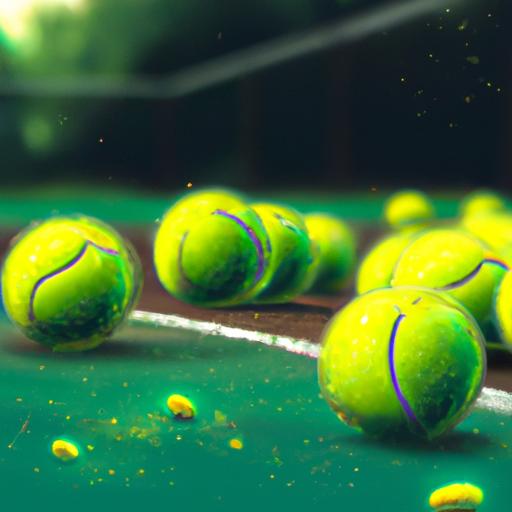
Have you ever been playing tennis and noticed that your ball wasn’t bouncing as high, or that it seemed a bit flat? You’re probably wondering if tennis balls go flat, and if so, what causes it and how can you keep your tennis balls in top condition? In this article, we will explore the surprising answer to the question: do tennis balls go flat? We’ll discuss what tennis balls are and what causes them to go flat, as well as the effects of a flat tennis ball and how to tell if a tennis ball is flat. We’ll also cover the benefits of regularly replacing your tennis balls, so that you can keep your game in top condition. Read on to discover the surprising answer to the question: do tennis balls go flat?
Table of Contents
Short Answer
Yes, tennis balls do go flat over time.
The amount of time it takes for a tennis ball to go flat depends on how much it is used and how it is stored.
Tennis balls should be kept in a cool, dry place when not in use in order to prolong their life.
If a tennis ball is used frequently, it may need to be replaced as often as every few weeks.
What Are Tennis Balls?
Tennis balls are an iconic part of the game of tennis and one of the most recognizable pieces of equipment used in the sport.
They are usually round, hollow and covered in a fuzzy yellow material called felt, which helps reduce the amount of friction the ball has with the surface of the court.
The felt also helps the ball to stay in the air longer, making it easier for players to hit shots with more power and accuracy.
Tennis balls are typically filled with a combination of pressurized air and gas, which helps them to stay bouncy and to remain afloat in the air.
The pressure and composition of the air and gas inside the ball is essential to its performance, as it helps to determine the balls bounce and spin, as well as its speed and trajectory.
Do Tennis Balls Go Flat?

Tennis balls are one of the most recognizable sports equipment in the world, with their iconic yellow hue, fuzzy texture, and bouncy feel.
But have you ever wondered if they go flat?
The answer is yes! As a tennis ball is used over time, the air pressure inside of it naturally decreases, resulting in a flat or dead ball.
This happens due to the air slowly leaking out of the ball, which is a natural part of its wear and tear.
When a tennis ball starts to go flat, it loses its bounce and wont perform as well in play.
This can be especially noticeable when the ball is served over the net, as its less able to rebound back up.
In addition, a flat ball will also travel slower and have less depth when hit.
To keep your tennis balls in top condition, its recommended to replace them every month or two of regular use.
This will ensure that your balls remain bouncy and offer the best performance during your games.
If youre playing in a tournament or competitive match, you may want to replace your balls even more frequently.
So, the next time you step onto the court, dont forget to check the bounce of your balls! If theyre starting to go flat, it may be time to replace them.
By doing so, youll enjoy a more enjoyable and competitive game of tennis!
What Causes Tennis Balls to Go Flat?
Tennis balls go flat due to a natural process known as air leakage.
This happens when small amounts of air slowly work its way out of the ball’s rubber core, resulting in a decrease in its internal pressure.
The rate of air loss is influenced by both the type of ball and the amount of use it gets.
For example, a ball used in tournaments or practice sessions multiple times a week will naturally lose air faster than a ball used only occasionally.
The air inside a tennis ball is what creates the bouncy feel and helps it to move faster when hit.
As the air slowly leaks out, the ball will start to lose its bounce and won’t perform as well in game play.
This is why it’s recommended to replace tennis balls every month or two of regular use.
In addition to air leakage, tennis balls can also go flat due to environmental factors such as extreme temperatures or high humidity.
Hot weather can cause the rubber core to expand, which reduces its internal pressure, while cold weather can cause the air to condense, resulting in a flat ball.
High humidity can also cause the rubber to weaken and the air to escape.
To keep your tennis balls in the best condition, it’s important to store them in a cool, dry place and avoid using them in extreme temperatures.
What Are the Effects of a Flat Tennis Ball?

When a tennis ball begins to go flat, it will have a noticeable effect on the game.
The ball’s bounce will be significantly reduced, making it difficult to hit with accuracy and power.
This can be particularly frustrating for a player who is used to a ball that is still in good condition.
Additionally, the ball will travel slower and have less spin, making it harder to control.
As a result, the game will become much less enjoyable for both players involved.
In addition to the effects on the game, a flat ball can be dangerous for a player’s joints.
Due to the reduced bounce, more force is needed to hit the ball.
This can put stress on the wrists, elbows, and shoulders, leading to injury over time.
Therefore, it is important to replace a ball as soon as it begins to go flat.
Finally, a flat ball can also cause damage to the court surface.
When the ball does not bounce correctly, it can cause uneven wear on the court.
This can lead to costly repairs and maintenance, and can even reduce the lifespan of the court.
Therefore, making sure to replace a flat ball is essential for preserving the court.
In summary, a flat tennis ball can have a significant impact on the game, a player’s body, and the court surface.
As such, it is important to replace a flat ball as soon as possible in order to keep the game safe and enjoyable.
How Do You Keep Your Tennis Balls in Top Condition?
Keeping your tennis balls in top condition is essential for optimal performance.
To ensure your balls stay in the best shape possible, there are a few steps you can take.
First, check the manufacturer’s instructions for the recommended inflation pressure of the ball.
Over-inflating the ball will cause it to wear down faster, reducing its bounce and making it more challenging to play with.
On the other hand, under-inflating the ball will prevent it from bouncing correctly, making it difficult to control.
Second, store your balls in a cool, dry place.
Heat and humidity can cause the rubber in the ball to break down faster, resulting in a less lively bounce.
It’s also important to keep the balls away from direct sunlight, as UV rays can damage the rubber and reduce the ball’s lifespan.
Third, check your balls regularly for signs of wear and tear.
A worn-out ball will have dimples and cracks that will reduce the ball’s bounce and make it more difficult to play with.
If you notice any signs of wear, it’s time to replace the ball.
Finally, replace your balls on a regular basis.
Depending on how often you play, you should be replacing your balls every month or two.
This will ensure the balls stay in top condition and remain bouncy and lively.
These steps can help you keep your tennis balls in top condition and ensure you have a great game every time.
With a few simple steps, you can ensure your balls stay bouncy and lively for longer.
How to Tell If a Tennis Ball Is Flat

If you’re wondering whether or not your tennis ball is flat, there is a simple way to test it.
First, take the ball and drop it from a height of a few inches.
If the ball bounces back with a consistent height and bounce, then it is still in good condition.
If the ball bounces back lower than the initial drop or doesn’t bounce at all, it is likely flat.
You can also place the ball on a flat surface and press down on it with your thumb.
If the ball bounces back quickly and with a consistent bounce, it is still in good condition.
However, if it does not bounce back at all or only slightly, then the ball is likely flat.
It is important to remember that the pressure in a tennis ball will naturally decrease over time, so even with regular use, a ball may eventually become flat.
Additionally, if you are using a ball for a long period of time, it may become flat even faster as the air inside the ball is slowly leaking out.
As the ball starts to go flat, it will lose its bounce and won’t perform as well in play.
To ensure that your tennis balls are always in top condition, it’s recommended to replace them every month or two of regular use.
This will help ensure that you always have a fresh ball with plenty of bounce.
The Benefits of Regularly Replacing Tennis Balls
When it comes to playing tennis, having the right equipment is key. One of the most important pieces of equipment used in the game is the tennis ball. While these balls come in a variety of sizes, colors, and materials, they all have one thing in common: they eventually go flat.
The good news is, you can avoid this problem by regularly replacing your tennis balls.
Replacing your tennis balls every month or two of regular use will keep them in top condition and ensure that you always have the best possible performance in play.
Doing this also keeps your tennis balls from losing their bounce, which can lead to inaccurate shots and a less than ideal playing experience.
Another benefit of regularly replacing your tennis balls is that it can help reduce the amount of money youre spending on the sport.
While tennis balls can be relatively inexpensive, the cost can add up quickly if youre playing often.
By replacing your balls regularly, you wont have to invest in new ones as often, which can help you save money in the long run.
Finally, regularly replacing your tennis balls is important for safety reasons.
As the pressure of the ball decreases over time, it can become more likely to burst.
This can cause a number of injuries, from bruises and sprains to broken bones.
By replacing your balls regularly, you can help reduce the risk of these types of injuries.
At the end of the day, regularly replacing your tennis balls is essential for maintaining the quality of your game.
Not only will it help you perform better on the court, but it can also help you save money and stay safe.
So, if you want to get the most out of your game and keep your equipment in top condition, make sure to replace your tennis balls every month or two of regular use.
Final Thoughts
The fuzzy yellow ball that we all know and love can indeed go flat, but with regular replacement, its easy to keep your tennis balls in top condition.
Knowing the signs of a flat ball will help you to recognize when its time for a new one.
For the best performance in play, make sure to replace your tennis balls every month or two, and youll be sure to always have a ball that bounces!